- Compelling mystery, strong narrative drive.
- Visually appealing, stylish and unique design.
- Engaging mysteries with clever cases.
- Outstanding and atmospheric soundtrack enhances experience.
- Well-developed and likable main characters.
- Repetitive side quests and noticeable padding.
What players like:
Common complaints:
Gameplay feedback:
Performance notes:
Recommendations:
Other player notes:
Similar games
Blend with other games 85%Danganronpa 2: Goodbye Despair
 83%Danganronpa: Trigger Happy Havoc
 83%Staffer Case: A Supernatural Mystery Adventure
 83%Danganronpa Another Episode: Ultra Despair Girls
 82%BURIED STARS
 82%Magical Girl Witch Trials
 82%Murders on the Yangtze River
 82%Danganronpa V3: Killing Harmony
 82%Higurashi When They Cry Hou - Ch.2 Watanagashi
 81%Tyrion Cuthbert: Attorney of the Arcane
 81%Mohism: Battle of Words
 81%Spirit Hunter: Death Mark II
Review evidence
Why players say this
Review evidence
Why players say this
What players like
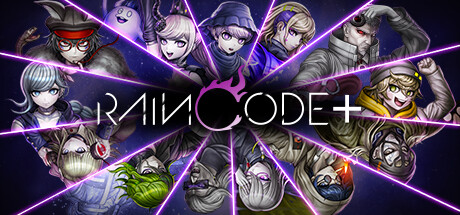
Compelling mystery, strong narrative: The game delivers a captivating mystery narrative with well-developed characters, intricate plots, and surprising twists. Many reviewers compare the game favorably to the Danganronpa series, citing similar themes, art style, and overall feel, with some considering it an improvement. The game's story, characters, and world-building are consistently praised.
Visually appealing, stylish design: The game features appealing visuals, including character designs, art style, and environments. Reviewers highlight the game's aesthetic qualities, noting the improved graphics and art direction compared to previous titles. The unique and stylish character designs are frequently mentioned as a strong positive.
Engaging mysteries, clever cases: The game features engaging mysteries and well-structured cases that require players to think critically and deduce solutions. Reviewers appreciate the unique detective abilities and the way the game avoids withholding information, allowing players to solve cases based on the clues provided. The cases are creative and interesting, with some reviewers highlighting specific cases as standouts.
Outstanding, atmospheric soundtrack: The game boasts an outstanding soundtrack that enhances the overall atmosphere and complements the gameplay. Many reviewers note the music's quality and its ability to heighten both emotional moments and the sense of mystery. Some reviewers note the music has a similar vibe to Danganronpa.
Enjoyable story, satisfying ending: The game's story is generally enjoyable, with a satisfying ending and well-developed characters. Reviewers appreciate the plot twists and turns, as well as the emotional depth of the narrative. Some reviewers note that the later chapters are particularly engaging.
Common complaints
Inferior to Danganronpa series: Many reviewers express disappointment with the game's characters, story, and mysteries when compared to the Danganronpa series. They find the characters underdeveloped, the plot predictable, and the cases less engaging. The game is seen as lacking the depth, emotional impact, and originality of its predecessor, with some reviewers even calling it a low-budget or boring imitation.
Repetitive side quests and padding: Many reviewers found the side quests and open-world elements to be repetitive, tedious, and ultimately unfulfilling. These aspects feel like filler, adding length without meaningful content or connection to the main story. The game's pacing is also criticized as being slow and drawn out, contributing to a sense of boredom.
Tedious and repetitive Mystery Labyrinths: The Mystery Labyrinths are criticized for being tedious, repetitive, and disconnected from the story. Reviewers found the mini-games uninspired and the overall experience to be a chore, with the solutions often being obvious before even entering the labyrinth. The labyrinths feel like unnecessary padding, artificially extending the game's length without adding meaningful content.
Easy, hand-holdy deduction: The game's deduction and mystery elements are criticized for being too easy and hand-holdy, with the game often providing obvious clues and solutions. The action elements feel out of place in a mystery game, and the game sometimes penalizes good deduction skills. The game's logic is also inconsistent, and the solutions to cases can feel contrived.
Slow character movement/pacing: The character's movement speed is too slow, making exploration and traversal feel tedious and frustrating. The fast-forward function is insufficient to alleviate the slow pace, and the game's tempo is generally poor. This contributes to a feeling of the game dragging on and wasting the player's time.
Gameplay and performance
Similar to Danganronpa, but different: The game shares many similarities with the Danganronpa series, including its structure, art style, mini-games, and focus on solving mysteries. However, it introduces new mechanics like the Mystery Labyrinth, which is comparable to Persona's palaces, and incorporates more action elements. While some find the similarities appealing, others feel it relies too heavily on the Danganronpa formula.
Mystery Labyrinth: tedious and uninspired: The Mystery Labyrinth is a core gameplay mechanic where players explore a manifestation of the case to solve puzzles, battle phantoms, and uncover the truth. However, many reviewers found the labyrinths to be linear, repetitive, and slow-paced, with uninteresting visuals and a lack of meaningful exploration. Some felt they disrupted the game's flow and didn't add much to the story.
Pacing and RPG elements are flawed: The game features a mix of investigation, puzzle-solving, and action elements, but some reviewers found the pacing strange and the RPG-like elements disjointed. Side quests are often uninspired fetch quests, and unnecessary QTEs and unskippable cutscenes disrupt the flow of gameplay. The leveling and character progression systems also lack depth.
Open world exploration is limited: The game features an open world with different city districts to explore, complete with side quests and a map for navigation. However, exploration often involves fetch quests and interacting with non-interactive NPCs and objects. The open world is segmented by loading screens when transitioning between areas.
Unique argument counter mechanic: The game features a mechanic to counter arguments, replacing the 'Truth Bullet' system with a dodge-and-weave minigame where players dodge verbal attacks and use 'Solution Keys' to counter contradictions. Combat involves identifying contradictions in enemy statements and using the correct 'solution key' to counter them, presented as a sword-swinging action.
Generally good performance and optimization: The game generally runs well on PC, Steam Deck, and even Linux, with many players reporting smooth performance at various resolutions and settings. Some players with high-end PCs experienced occasional FPS drops, while others noted excellent optimization. Most did not encounter game-breaking bugs.
Critical bugs cause system restarts: Some players have reported a critical bug that can cause the computer to restart, possibly due to voltage overload. There's also a bug with resolution settings in multi-display environments.
Broken Steam Cloud syncing: Steam Cloud syncing is reportedly broken due to a very small quota per user. This prevents players from properly syncing their game progress across multiple devices.
Static train window scenery: A minor graphical glitch was observed in the first chapter where the train window scenery is static. This breaks immersion for some players.
Dialogue appears slowly: Even with maximum text speed, the next dialogue line doesn't appear instantly.
Recommendations
Compared to Danganronpa: The game is frequently compared to Danganronpa, with many reviewers recommending it to fans of that series. However, some caution that it may not live up to the standards of Danganronpa and suggest managing expectations. Some reviewers suggest that Danganronpa is a better alternative.
Mixed feelings overall: Many reviewers express mixed feelings, noting both positive and negative aspects. Some recommend the game despite its flaws, while others are more critical. Some reviewers recommend playing the game to the end, while others dropped the game before finishing it.
Wait for a sale: Many reviewers suggest waiting for a sale before purchasing, as the full price may not be justified by the content or quality. Some feel the game is only worth buying at a significant discount, while others recommend it at full price, especially if you are a dedicated fan.
Hope for a sequel: Many reviewers express hope for a sequel that improves upon the current game's shortcomings. They are excited about the potential of the universe and characters and want to see the story continue. Some reviewers have specific ideas for the sequel's plot or gameplay.
Generally recommended game: Many reviewers recommend the game, highlighting its strengths and enjoyable aspects. Some describe it as excellent, brilliant, or a must-play, while others simply state that they enjoyed it or found it worthwhile. Some reviewers recommend the game for specific types of players, such as those who enjoy puzzle-solving or visual novels.
Other review notes
Strong Danganronpa similarities/influences: Many reviewers compare this game to Danganronpa, noting similarities in art style, music, character design, and narrative structure due to shared staff and the storytelling style of Kazutaka Kodaka. Some find the similarities distracting, while others appreciate the familiar feel. However, some reviewers noted that the characters' personalities are not as strong compared to Danganronpa 1 and 2.
Sequel hinted at in ending: Several reviewers noted that the game's ending and epilogue strongly suggest the possibility of a sequel. The amount of 3D assets created for the game also makes a second installment worthwhile. Some reviewers even speculate on the potential setting for a sequel.
Shinigami is a highlight: Shinigami is a highlight of the game. Shinigami character is a mix of comic relief, fan-service, sidekick, and fetish elements. Some reviewers found the little grim reaper character to be cute.
Uneven character development/world-building: Some reviewers found that the side missions expand on side characters and provide world-building, but can be skipped without missing much if not invested in the story. Other reviewers noted that the main characters are well-developed, but the supporting characters lack depth. Some found the explanations of settings unnecessary and irrelevant.
Protagonist with amnesia/death god: The protagonist, Yuma Kokohead, is a blend of Kyoko Kirigiri’s intellect and Shuichi Saihara’s charm, growing throughout the story. He suffers from amnesia and forms a pact with Shinigami, a death goddess who assists in investigations. The story begins with the protagonist waking up in an unfamiliar room with amnesia, guided by a ghost named "Little Death."