- Unmatched variety of board games included
- Cost-effective alternative to physical games
- Essential tool for game developers and testers
- Poor controls and VR implementation issues
- Community content reliability concerns persist
- Clunky interface with tool limitations
Emotions
What players like:
Common complaints:
Gameplay feedback:
Performance notes:
Recommendations:
Other player notes:
Similar games
Blend with other games






Review evidence
Why players say this
Review evidence
Why players say this
What players like
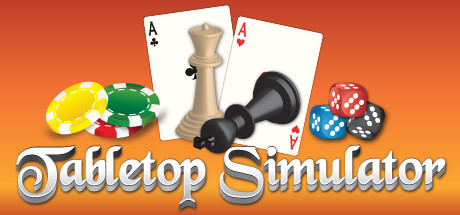
Unmatched board game variety: The platform offers an extensive library of board games, card games, and tabletop RPGs via its workshop and pre-installed options. Users can access thousands of free mods, including rare and custom projects, making it a one-stop hub for digital tabletop gaming.
Cost-effective alternative to physical games: The software provides a low-cost way to access expensive or hard-to-find physical board games. Users save money by testing games digitally before purchasing physical copies, avoiding costs like miniatures, storage, or lost components.
Essential for game developers and testers: The platform is invaluable for prototyping, playtesting, and refining board games or RPGs. Developers use it to demo Kickstarter projects, automate setups, and simulate complex mechanics without physical costs.
Versatile for all skill levels: The platform accommodates beginners (simple card games) to experts (D&D campaigns, Warhammer battles). Tutorials, intuitive controls, and modding flexibility make it accessible, while advanced scripting caters to power users.
Quality-of-life features: Automated tools (e.g., scripted setups, auto-placement of tokens) reduce tedious tasks like scoring or cleanup. The in-game browser tablet and workshop integration streamline gameplay, especially for complex games like Warhammer 40k.
Common complaints
Poor controls and VR implementation: Controls are described as unintuitive, fiddly, and often non-functional, especially in VR. Players struggle with basic actions like moving pieces or exiting menus, and VR is criticized as 'half-baked' or 'infuriating.'
Community content reliability issues: Workshop games and mods are inconsistent in quality, with many broken or low-quality submissions. Paid mods and updates have disrupted existing content, leading to fears of 'enshittification' and loss of access to free mods.
Clunky interface and tool limitations: The interface is described as unintuitive, outdated, and difficult to navigate, especially for newcomers. Tools for object manipulation, painting, and table customization are poorly designed or missing entirely.
Monetization and DLC concerns: Players criticize the focus on paid DLCs and mods, which are often low-quality or incomplete. The introduction of paid mods years after release has sparked backlash, with fears of further monetization degrading the experience.
Unfinished and buggy gameplay: Players report the game feels half-finished, with frequent bugs, disconnections, and temporary fixes that fail to address core issues. Multiplayer functionality is often broken, making the game unplayable at times.
Gameplay and performance
Comprehensive tabletop simulator: The platform acts as a digital sandbox for virtually any tabletop, board, or card game, including classics like Chess, Monopoly, and complex RPGs like D&D and Warhammer 40K. It replicates physical components (dice, cards, miniatures) with realistic physics and supports mods for thousands of games.
Extensive mod and workshop support: Steam Workshop integration provides access to thousands of free mods, custom games, and user-generated content (e.g., Warhammer factions, MTG decks). This community-driven ecosystem significantly extends the platform’s functionality and game variety.
Remote multiplayer focus: Designed for online play with friends or strangers, the platform supports voice chat, Discord integration, and P2P hosting. It enables remote tabletop gaming with up to 10 players, though connectivity issues post-update have been reported.
Warhammer and MTG specialization: Popular for digital adaptations of Warhammer 40K, Kill Team, and Magic: The Gathering (including Commander). Workshop mods provide factions, codexes, and automated rules, though the experience may lack official licensing.
Game creation and prototyping tools: Includes a user-friendly editor for designing custom boards, cards, miniatures, and RPGs. Features like Lua scripting, 3D map builders, and automation tools allow users to prototype, playtest, and share original games or adaptations.
Connectivity and server problems: Frequent disconnections, server instability, and connectivity issues (including LAN and VPN) disrupt gameplay. Players also face errors during game launch and content loading.
Severe performance and lag issues: Players report significant lag, FPS drops, and poor optimization, especially in complex scenarios or with many players. High-end hardware does not always resolve these issues, indicating systemic performance problems.
System requirements and optimization: While some players note low system requirements, others report poor performance even on high-end hardware. Optimization issues are widespread, especially for large maps or mods.
Physics engine inconsistencies: The physics engine is described as laggy, unrealistic, and prone to glitches, particularly with game objects. This affects immersion and gameplay mechanics.
Control and interface malfunctions: Volume controls and VR controls are reported as unreliable or unintuitive, detracting from the user experience.
Recommendations
Ideal for Warhammer and RPG players: The game is highly recommended for Warhammer 40k fans, D&D players, and RPG groups, providing a platform for virtual game nights, map creation, and miniatures management with minimal microtransactions.
Best for remote socializing: The game is ideal for introverts, distant friends, or families looking to socialize and play board games remotely, offering a fantastic substitute for physical tabletop sessions.
Community and creativity hub: Tabletop Simulator is highlighted as a common environment for tabletop designers and a platform for bringing game ideas to life. It encourages creativity and offers a workshop for sharing custom mods and games.
Multiplayer issues hinder experience: Several users advise against purchasing until multiplayer issues are resolved, as these problems significantly impact the game's usability for remote play with friends or communities.
Not suitable for VR: The game is explicitly not recommended for VR users, as it does not provide a satisfactory experience in that format.
Platform notes
Steam Deck: User feedback on the Steam Deck experience for this game highlights several critical friction points. The most severe issues include the requirement to enable 'Proton Experimental' for compatibility, frequent crashes or instability on Linux-based systems, and poor or unintuitive controller support. While the game has a native Linux version and offers a vast library of board games, these technical barriers significantly degrade the user experience, requiring manual intervention and troubleshooting to achieve basic functionality.
Extra review signals
Monetization: User feedback on *Tabletop Simulator* reveals significant frustration with its monetization strategy, particularly its excessive and overpriced DLC. The game is criticized for locking core experiences (e.g., popular board games or multiplayer functionality) behind paid DLC, making them feel mandatory rather than optional. Day-1 DLC and content fragmentation (e.g., removing free workshop content to sell as DLC) are also flagged as predatory. While the quality and maintenance of DLC are inconsistent, the free Steam Workshop is widely praised as a mitigating factor, offering a vast library of user-created content that reduces reliance on paid DLC. However, the sheer volume and perceived necessity of DLC overshadow these positives, leading to a polarized reception.
Other review notes
Paid mods raise ethical concerns: Concerns about paid modding include threats to the game's longevity, ethical issues around community content monetization, and fears of piracy or bootleg mods (e.g., 'Bedrock Marketplace'). Some players view this as exploitative or unsustainable.
DLC overshadows base game: Players criticize the focus on DLC releases instead of improving core gameplay features. Workarounds like Discord and OBS are suggested for missing functionalities, indicating dissatisfaction with base game development priorities.
Demand for sequel or competitor: Frustration with the current state of the game leads to calls for a sequel or a competing product that addresses unmet needs or modernizes the experience.
Modding scene in transition: Players note shifts in the modding ecosystem, likely due to new monetization models or platform policies. The long-term impact on creativity and accessibility is debated.
Free mods still available: Despite paid modding concerns, free workshop content remains accessible, offering an alternative for players who prefer non-monetized community contributions.