- Captivating retro atmosphere and soundtrack.
- Authentic street racing revival experience.
- Extensive car customization options.
- Responsive driving with exhilarating sense of speed.
- Confusing map and poor navigation.
- Limited content, polish, and frequent bugs.
Emotions
What players like:
Common complaints:
Gameplay feedback:
Performance notes:
Recommendations:
Other player notes:
Similar games
Blend with other games



Review evidence
Why players say this
Review evidence
Why players say this
What players like
Captivating Retro Atmosphere: The game excels at creating a unique and immersive atmosphere, heavily drawing on 90s/2000s Japanese street racing culture with a distinct retro aesthetic. This strong sense of place and nostalgia is consistently highlighted as a major draw.
Authentic Street Racing Revival: The game is lauded as a refreshing return to form for the arcade street racing genre, particularly evoking the spirit of 90s/2000s Japanese titles like Need for Speed Underground and Tokyo Xtreme Racer. Many reviewers find it superior to contemporary AAA racing games, fulfilling a long-standing desire for this specific niche.
Extensive Car Customization: The game offers an impressively deep and detailed car customization system, allowing players to modify both visual and performance aspects with a vast array of parts. This extensive tuning capability, including specific engine and interior options, is a significant highlight for car enthusiasts.
Responsive Driving & Handling: The core driving mechanics are highly praised for being smooth, responsive, and enjoyable, even with keyboard controls. Reviewers highlight the satisfying car handling and realistic engine sounds, contributing to a comfortable and engaging driving experience.
Exceptional Soundtrack: The game's soundtrack is consistently praised for its high quality, fitting perfectly with the game's theme and atmosphere. Many reviewers found tracks compelling enough to add to their personal playlists, highlighting its significant contribution to the overall experience.
Common complaints
Confusing Map & GPS: Players consistently report that the in-game map and GPS system are difficult to understand and follow. This often leads to missed turns, getting lost, and frustration, especially at intersections or during races. The visual clarity of the map and directions is frequently criticized.
Poor UI & Tutorials: The overall user interface and menu navigation are widely described as unintuitive, clunky, and slow, making simple tasks tedious. Additionally, the game lacks proper tutorials and clear guidance, leaving new players confused about progression and basic mechanics.
Lacks Content & Polish: Reviewers frequently note that the game feels unfinished, lacking sufficient content such as diverse event types, locations, and a compelling story mode. Many fundamental mechanics and general polish are also reported as missing or underdeveloped, leading to a repetitive and unrefined experience.
Poor AI & Collision Physics: Beyond general difficulty, the AI behavior in races is criticized for being inconsistent, with opponents sometimes crashing easily or acting erratically. Additionally, the collision physics are described as unrealistic, with cars bouncing off each other without proper damage modeling, impacting race integrity.
Poor Respawn Mechanics: A significant issue is the car respawn system, which often places the player's vehicle facing the wrong direction after a crash or reset. This frequently causes immediate losses in races, wastes time, and severely disrupts gameplay flow.
Gameplay and performance
Deep Car Customization: Players praise the extensive and in-depth car customization options, covering visual aspects (body kits, interior, paint) and mechanical tuning (engine, suspension, gearbox). These modifications significantly impact car performance and handling.
Immersive Driving Experience: The game delivers a strong sense of speed and realistic yet arcadey driving physics, making high-speed street racing feel immersive. It features diverse racing activities like 1v1 and time trials.
Inconsistent Difficulty/No Tutorial: Player feedback on difficulty is inconsistent, ranging from very easy to very hard, sometimes within the same review. The game also lacks a clear tutorial, forcing players to learn mechanics independently.
Limited Car Roster: A recurring point is the very limited number of available cars, often only two variations of the same model in the prologue/beta. This restricts player choice and variety.
Yakuza Debt & Economy: The game features a central narrative element of owing a significant debt to the Yakuza, which players must repay through winning races. This system integrates with betting, loans, and reputation gain.
Strong Performance & Optimization: Many players report excellent performance, smooth frame rates, and good optimization across a range of hardware, including older GPUs. The game generally runs well without significant slowdowns or bugs during core gameplay.
Low System Requirements: The game is frequently noted for its low resource intensity, allowing it to run on older or less powerful 'potato' PCs, even without a dedicated graphics card in some cases. This makes it accessible to a wide range of hardware configurations.
Gamepad Support & Minor Bugs: The game offers good support for Xbox gamepads, with players reporting no issues. However, there are mentions of minor bugs, such as a non-functional car change feature, which could benefit from developer attention.
Recommendations
High Anticipation & Recommendation: Players are overwhelmingly excited for the full release, expressing strong intent to purchase and recommending the current free prologue/demo. Many consider the demo itself to be excellent and a must-play, highlighting its significant value and eagerly awaiting more content.
Niche Appeal: JDM/Racing Fans: The game strongly resonates with fans of Japanese car culture, street racing, and classic arcade racers like Need for Speed Underground or Midnight Club. Reviewers highly recommend it to those who appreciate this specific aesthetic and gameplay style.
Great Potential, Needs Refinement: Reviewers recognize the game's immense potential to become a top title in its genre. However, they also note that it requires further development, tuning, and content additions to fully realize this potential and avoid disappointment.
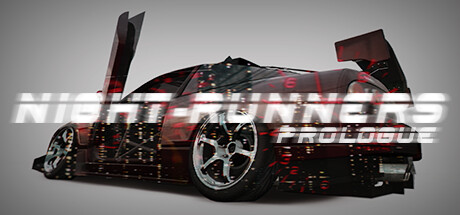
Night-Runners Specific Praise: Reviewers specifically mention "Night-Runners" by name, expressing deep affection and strong recommendations for the game. They highlight its atmospheric, story-driven action and intense racing vibe.
Free-to-Play Value: A significant number of reviewers highlight that the game is currently free, making it an accessible and highly recommended experience. This aspect contributes to its perceived value and encourages players to try it without hesitation.
Other review notes
More Cars, Customization, Multiplayer: Players consistently request a significant expansion of content, including more diverse car models (e.g., JDM classics), deeper customization options (visual and performance tuning, modding support), and the addition of online multiplayer modes. They also desire more race types, locations (like touge battles), and a more engaging story mode.
Eagerly Awaiting Full Release: Reviewers express overwhelming excitement and impatience for the game's full release, often stating their willingness to purchase it immediately. There's a strong desire to see the game's complete vision, including expected content and features, with some mentioning specific anticipated release dates.
Game is Demo/Prologue: Reviewers frequently note that the game is currently an early access demo or 'prologue' version, not a finished product. This context is crucial for understanding the limited content and serves as a showcase of the game's potential.
Impressive Solo Developer Work: Many reviewers are impressed by the fact that the game is primarily developed by a single person or a small, dedicated team. This highlights the passion and effort behind the project, often leading to increased appreciation.
Outstanding Music & Atmosphere: The game's music, particularly tracks like 'Emotion Engine' by Dazegxd, receives high praise for perfectly fitting the game's feel, atmosphere, and speed. Reviewers highlight the soundtrack's quality and its contribution to the overall experience.