- Fun and enjoyable
- Captures Deep Rock Galactic charm
- Unique take on Vampire Survivors
- Excessive grind and repetition
- Poor balance and difficulty spikes
- Endless mode performance unplayable
Emotions
Archetypes
Hardware
What players like:
Common complaints:
Gameplay feedback:
Performance notes:
Recommendations:
Other player notes:
Similar games
Blend with other games






Review evidence
Why players say this
Review evidence
Why players say this
Steam review verdict
A fun, unique Vampire Survivors-style take that captures Deep Rock Galactic's charm, but excessive grind, poor balance, brutal difficulty spikes, and unplayable Endless mode performance hold it back.
What players like
Fun and enjoyable: Many reviewers describe the game as fun, enjoyable, and pleasant. It provides a lighthearted and entertaining experience.
Pleasant graphics: Reviewers find the graphics beautiful, nice, and pleasant. They contribute positively to the overall experience.
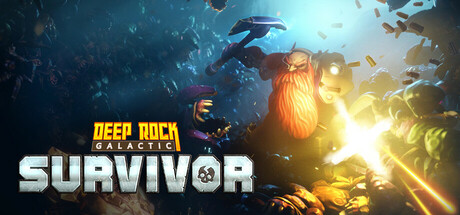
Captures Deep Rock Galactic charm: Players praise how well the spin-off captures the humor, atmosphere, and spirit of Deep Rock Galactic. It feels like a faithful extension of the franchise.
Unique take on Vampire Survivors: The game stands out in the Vampire Survivors genre with unique and engaging mechanics. It is often seen as better than similar games.
Rewarding progression: The progression system feels rewarding and motivating. Players feel a sense of achievement after each run.
Common complaints
Excessive grind and repetition: Players frequently report the game becomes overly grindy and repetitive over time, especially in late game and higher difficulties. This leads to tedious progression and reduced enjoyment.
Poor balance and difficulty spikes: Balance issues and harsh difficulty spikes, particularly around Hazard 3-4, make the game frustrating and unfairly hard for many players. Enemies can be too fast or take too long to kill.
Endless mode performance unplayable: Endless mode suffers severe frame rate drops and stuttering, often becoming unplayable or crashing beyond level 17-20. Performance issues persist even on high-end GPUs and with effects disabled.
Upgrades and progression unrewarding: Upgrades often feel meaningless or too weak, and meta-progression is slow and grindy with little payoff. Gear drops are random and can be unbalanced, adding to frustration.
DLC overpriced and low value: Multiple DLCs are criticized for costing as much as or more than the base game while offering minimal content, such as a single class or weapon. This pricing is widely seen as unfair.
Gameplay and performance
Survivor Roguelite Genre: The game is a survivor roguelite, often compared to Vampire Survivors, blending roguelike and survivor-like elements. It falls into the bullet heaven or action roguelike subgenre with top-down auto-shooter mechanics.
Hazard Difficulty Levels: Difficulty is tiered via Hazard levels ranging from 1 to 5, with higher hazards like 3, 4, and 5 being very challenging. These levels determine enemy strength and overall difficulty, with Hazard 3 as a common threshold.
Progression and Grind: The game has grind-heavy progression systems with meta progression, unlocks, and improvements. Long-term progression includes a mastery system, upgrade shop, and gear collection for stats and items.
Weapon Unlocks and Upgrades: Players unlock and upgrade a variety of weapons, classes, and class mods, with multiple tiers and customizations. Weapons feature overclocks at levels 6, 12, and 18 that drastically alter power and playstyle.
Endless Mode Available: The game features an Endless mode added via patch, allowing longer runs past level 100 with stages that reset and get harder. It includes bosses that charge repeatedly after wave 10, providing extended gameplay without metaprogression.
Lag and Stuttering Common: Players frequently experience lag spikes, stuttering, and frame drops, even on capable hardware. These issues occur in various situations, including high enemy density and specific biomes.
Poor Optimization Reported: A significant number of players criticize the game for poor optimization, experiencing lag and stuttering even on high-end systems like RTX 5060Ti and 5070. Lowering settings does not always help.
Optimization Praised: Many users commend the game's solid optimization, noting smooth performance even with hundreds of enemies and explosions on screen. It runs well on a variety of hardware configurations.
Crashes and Freezes: Frequent crashes and freezes occur during gameplay, at the end of levels on max difficulty, and in endless mode past level 20. Some crashes can lead to save file deletion.
Steam Deck Performance Mixed: While some find performance excellent on Steam Deck, others report frame drops and issues, especially in later difficulty hazards. Battery drain is also a concern.
Recommendations
Recommended for Deep Rock Galactic Fans: Many reviewers recommend the game specifically to fans of Deep Rock Galactic. They suggest it appeals to those who enjoy the universe and style of DRG.
Recommended for Vampire Survivors Fans: Reviewers frequently recommend the game to fans of Vampire Survivors or similar survivor-like games. It is seen as a good fit for those who enjoy the genre.
Worth the Price: Multiple reviews state the game is worth buying at its price. Some mention it is worth every penny, while others say it is a steal at regular price.
Strong Recommendation: Many reviewers give a strong recommendation, often with high scores or emphatic language. They definitely recommend the game.
Cannot Recommend: A few reviewers cannot recommend the game, either in its current state or at all. Some cite specific reasons, while others simply do not recommend it.
Buying context
Community fair range: $6.50 - $12.99.
Game completion: 43.0h.
Session length: 0.5h.
Endgame: 200.0h.
Players often find the game immediately addictive and easy to pick up, but many report that enjoyment drops over time due to repetitive maps, slow meta-progression, and grind.
Friction: steep learning curve; early repetition; slow meta-progression; RNG-dependent gear; difficulty spikes; lack of co-op.
Unlock drivers: converting resources into meta-progression upgrades; accelerated meta-progression after early access; unlocking new weapons and classes; build customization and gear progression.
Player profiles
Survivor Roguelite Veteran: Auto-shooting horde clears, optimizing classes, weapons, and meta builds across higher hazard levels. Motivation: Chasing addictive build experimentation and mastery across escalating survivor runs. Stance: buy.
Deep Rock Galactic Co-op Loyalist: Solo class-based missions with mining and horde shooting, while strongly desiring co-op multiplayer. Motivation: Returning to the Deep Rock Galactic universe and sharing its mining-combat loop with friends. Stance: sale.
Grind-Weary Progression Critic: Repeating runs for small meta upgrades, often pushing until difficulty spikes and then losing motivation. Motivation: Seeking meaningful progression and build variety, but feeling blocked by slow, unrewarding grind. Stance: no buy.
Platform notes
Performance across these Windows hardware cohorts is inconsistent: several tiers report smooth or optimized play, but others still experience crashes, stutters, and frame drops. The most negative reports come from the 16GB+ VRAM cohort, while the <8GB VRAM / <16GB RAM cohort is mostly positive.
Windows 8-11GB VRAM: mixed. Some users report smooth optimization and stable high-density combat, but many mention crashes, lag spikes, freezes, and startup failures.
Windows <8GB VRAM / 16-31GB RAM: mixed. Reports include smooth Linux and Steam Deck play and 144 FPS on a laptop, but also frequent FPS drops in high-density scenes, poor optimization, and startup crashes.
Windows 12-15GB VRAM / 16-31GB RAM: negative. This cohort frequently reports crashes in endless or long runs, severe stuttering, low FPS, and poor optimization even on higher-end systems.
Steam Deck: The dataset shows a mixed Steam Deck profile. Many users praise the game as a natural fit for short handheld sessions, with reports of stable 60 FPS and good Linux support. However, recurring technical barriers remain: late-game frame drops and slow motion, heavy battery drain and loud fans, small UI text, missing graphics options that force manual tuning, and save/settings sync friction. Most importantly, multiple independent reviews report startup crashes, black screens, menu freezes, and launch failures. Under the scoring criteria, the presence of frequent crash and launch-failure evidence places the experience in the Broken range despite positive reports.
Linux and Proton: The game demonstrates strong Linux and SteamOS compatibility, with multiple users reporting smooth performance and no issues. One isolated user reported a regression where the game stopped working on Linux and stutters during combat. Overall, the game is generally working well on Linux with minimal friction.
Extra review signals
Monetization: The reviews center on a paid expansion (the Heavy Duty DLC) that locks a new biome, a new class, and a game mode behind a paywall and is frequently criticized for costing nearly as much as the base game while adding modest content. Several reviewers frame this as cut content or Day-1 DLC and one loosely calls it 'pay-to-win,' but the evidence points only to a traditional paid expansion rather than an in-game cash shop, gacha, battle pass, or currency system. Other negative comments concern grind, RNG, and difficulty, which are gameplay issues rather than monetization, and some reviewers affirm the game is cosmetic-only with no pay-to-win. No direct evidence of real-money lootboxes, paid power, or currency obfuscation was found.
External guides: The audit finds no explicit Tier 1 farming, drop-rate, or loot-table dependency and no clear Tier 2 inventory, crafting, blueprint, or safe-to-sell dependency. The main external-data pressure is instructional: players must search for hidden weapon/stat mechanics and high-level dive knowledge, which maps to Tier 3 (The Student). A controller tab-out bug and a spreadsheet-simulator criticism are present but are secondary and do not change the strict priority result.
Other review notes
Frequent Vampire Survivors comparisons: Multiple clusters compare the game to Vampire Survivors, often noting it as a successor or evolution of the genre. Opinions range from favorable to critical, but the comparison is pervasive.
Deep Rock Galactic spin-off: The game is consistently described as a spin-off set in the Deep Rock Galactic universe, retaining the franchise's charm and aesthetic. This connection is a major draw for fans.
Steam Deck compatibility praised: Many reviewers highlight that the game runs well and is fully playable on Steam Deck, often comparing it favorably to PC. This portability is a key positive for users.
Early Access history and updates: Reviewers mention that the game was in Early Access and received regular updates, leading to a polished 1.0 release. The iterative development is seen as positive.
Grindy progression and achievements: The game features a grind-heavy progression system and a large number of achievements (around 300), with 100% completion taking hundreds of hours. This appeals to completionists but may deter others.