- Stunning pixel-art visuals praised
- Immersive soundtrack and atmospheric horror
- Engaging characters and narrative-driven gameplay
- Repetitive, tedious gameplay loops
- Shallow, simplistic puzzles
- Lack of player agency
Emotions
Archetypes
What players like:
Common complaints:
Gameplay feedback:
Performance notes:
Recommendations:
Other player notes:
Similar games
Blend with other games 83%PARANORMASIGHT: The Seven Mysteries of Honjo
 82%Raging Loop
 81%Higurashi When They Cry Hou - Ch.2 Watanagashi
 81%The Silver Case
 81%Return of the Obra Dinn
 80%PARANORMASIGHT: The Mermaid's Curse
 80%Kill The Shadow
 80%Danganronpa: Trigger Happy Havoc
 80%NOeSIS02_羽化
 80%fault - milestone one
 80%CORPSE FACTORY
 80%Umineko When They Cry - Question Arcs
Review evidence
Why players say this
Review evidence
Why players say this
What players like
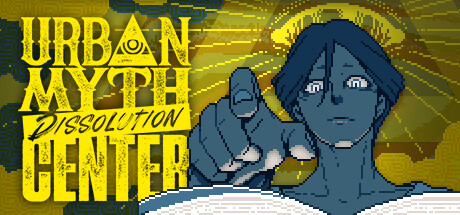
Stunning pixel-art visuals praised: Players consistently highlight the game’s distinctive pixel-art style, calling it expressive, detailed, and visually striking. The cohesive color palette (blue-gray with red accents), character designs, and animations are frequently praised for creating a unique, atmospheric experience.
Satisfying twist endings: The narrative’s surprising, well-foreshadowed twists and impactful conclusions are a major highlight. Players describe the endings as shocking yet logically justified, with strong payoffs that recontextualize earlier clues and elevate the story.
Immersive soundtrack and sound: The soundtrack, including the main theme and ending song, is widely praised for enhancing the game’s mood and atmosphere. Players note its high quality, emotional resonance, and ability to complement the visual style and narrative tension.
Critique of SNS culture: The game’s thematic focus on social media—including misinformation, anonymity, and internet conspiracies—is praised for its realism and depth. Mechanics like in-game tweets and rumor-gathering integrate seamlessly with the narrative, adding layers of modern relevance.
Engaging characters and charm: Characters are frequently described as likable, charismatic, and well-developed, with standouts like Jasmine and Azami. Their designs and personalities add emotional weight and replay value, contributing to the game’s appeal beyond its mystery elements.
Common complaints
Repetitive, tedious gameplay loops: Players criticize the game for excessive clicking, backtracking, and repetitive tasks (e.g., 'mindlessly clicking red arrows,' 'total object clicking'). The investigation phases, especially in later chapters, feel like chores with minimal payoff, lacking meaningful interactivity or engagement. This includes complaints about 'work-like progression' and 'sleep-inducing' mechanics.
Poor story coherence: The plot is criticized for logical inconsistencies, unresolved threads (e.g., supernatural teases without payoff, underdeveloped twists like the '0th Card'), and contrived character motivations. Urban legends and side stories often feel disconnected or poorly integrated, with key details introduced too late or ambiguously. Plot holes and 'unearned' reveals undermine immersion.
Shallow, simplistic puzzles: Puzzles are widely criticized for being overly simplistic, lacking depth, and relying on pixel-hunting or fill-in-the-blank mechanics. Hardcore mystery fans find them unchallenging, with solutions often telegraphed or fed to the player. Examples include 'baseline memory training' and 'grammatical hint-based' word puzzles that undermine deduction satisfaction.
Lack of player agency: Gameplay suffers from excessive hand-holding, linear progression, and no meaningful choices or consequences. Players feel like passive observers, with investigations reduced to 'push-button' actions and deductions spoon-fed by the protagonist’s alter-ego. This undermines the satisfaction of solving cases and disappoints those expecting active problem-solving.
Misleading urban legend theme: Players express disappointment that the 'urban legend' horror theme is reduced to mundane, Scooby-Doo-style explanations (e.g., hoaxes, moral lessons). The lack of genuine supernatural elements or ambiguity removes the horror/mystery appeal, making the setting feel wasted. Some describe it as 'false advertising' for a game marketed as urban legend-focused.
Gameplay and performance
Narrative-driven visual novel gameplay: The game is primarily a visual novel with narrative-driven gameplay, featuring elements such as chapter-based storytelling, mystery themes, and light investigative mechanics. Players experience a linear narrative with minimal branching, focusing on dialogue and story progression.
Puzzle-solving and investigation mechanics: The game includes puzzle-solving and investigation segments where players collect clues, solve mysteries, and engage in deduction phases. These mechanics are often tied to narrative progression and feature point-and-click interactions, multiple-choice puzzles, and no fail states.
Episode-based chapter structure: The game is structured in episodes or chapters, each containing self-contained mysteries that contribute to an overarching narrative. This episodic format helps in delivering a cohesive and engaging story with dramatic staging and high-quality payoffs.
Urban legend and misinformation themes: The game explores themes of urban legends, internet culture, and misinformation. Players investigate and debunk urban legends through a series of interconnected cases, often involving social media and online research.
Social media integration: Social media (SNS) is integrated into the gameplay, allowing players to gather clues, rumors, and background information through simulated internet research. This mechanic enhances the investigative aspects of the game.
Audio mixing disrupts dialogue: Players report that the vocal track frequently overlaps or interferes with in-game dialogue, making it difficult to follow conversations clearly. This issue is consistently highlighted as a detractor from immersion.
Steam Deck compatibility confirmed: Multiple players confirm the game runs well on Steam Deck, indicating strong portability and accessibility for handheld play. No major compatibility issues were reported in this context.
Recommendations
Atmosphere over traditional mystery: Appeals to players who enjoy immersive storytelling, social commentary, and thematic narratives (e.g., urban legends, SNS dynamics) rather than traditional detective gameplay or fair mystery design. Not recommended for those expecting occult horror or active deduction.
Story-driven, not gameplay-focused: The game is consistently recommended for players who prioritize narrative, visuals, and atmosphere over traditional gameplay mechanics like puzzles or deep mystery-solving. Many reviews emphasize its appeal to those seeking a 'brain-off' or visually rich experience, while cautioning gameplay-focused players to avoid it.
Mixed reception on gameplay depth: Criticized for weak writing, contrived twists, and lack of challenging puzzles or branching narratives. Some suggest it feels more like an 'OC showcase' than a substantive experience, recommending alternatives like 'masterpiece visual novels' instead.
Niche appeal for meta/OC content: A smaller subset of reviews recommends the game specifically for its meta-commentary on urban legends or as an 'OC showcase,' though this is often framed as a caution rather than a selling point.
Recommend demo or discount purchase: Due to mixed reception, many suggest trying the demo first to gauge tolerance for pacing or gameplay style. Others recommend buying only at a steep discount (e.g., ¥30 or during sales), citing better alternatives in the genre.
Buying context
Community fair range: $15.00 - $20.00.
Game completion: 10.0h.
Story completion: 10.0h.
Session length: 2.0h.
Reported time to anchor: 12h.
Friction: 調査・証拠集めの作業感(同じ場所を繰り返し調べる必要がある); SNS調査の単調さ(繰り返しの会話やメッセージの確認); 中盤のペースの悪さ(特に2~4話の展開が緩慢); 推理の難易度が低く、メタ読みで進められるため頭を使う必要がほとんどない; 演出やテキストの冗長さ(長い説明や繰り返しのセリフ); ゲームシステムの単調さ(クリックと読み進めるだけのループ).
Unlock drivers: ストーリーの伏線が6話で収束し、展開が二転三転するサプライズ; BGMや演出のクオリティ(特に緊張感やカタルシスを高める効果音); キャラクターの個性的な魅力(特にジャスミンやアザミの掛け合い); 最終章の予想外の結末(大オチの衝撃); ミステリー要素の「先が気になる」展開(伏線回収の手応え); 視覚的・聴覚的な没入感(アートスタイルやサウンドトラックのクオリティ).
Player profiles
Casual Storytime Newcomer: Linear progression, skips or tolerates repetitive mechanics, prioritizes narrative and aesthetic (e.g., pixel art, music) over challenge. Motivation: Stress-free, accessible storytelling with minimal gameplay barriers. Stance: sale.
Trope-Hunting Connoisseur: Focuses on narrative payoffs, lore, and atmospheric details; skims or endures repetitive gameplay for thematic satisfaction. Motivation: Thematic immersion in urban legends, mystery, and retro/indie aesthetics. Stance: buy.
Critical Mystery Veteran: Deconstructs plot holes, compares to genre benchmarks, and prioritizes logical satisfaction over casual enjoyment. Motivation: Seeking mechanically or narratively sophisticated mystery experiences. Stance: deep sale.
Platform notes
Steam Deck: The game demonstrates **exceptional compatibility** with Steam Deck, with users uniformly reporting smooth performance, intuitive controller-supported UI, and no technical barriers (e.g., no Proton tinkering, launcher issues, or unreadable text). The few critiques pertain to game design (not technical friction), and there are **zero reports** of crashes, anti-cheat errors, or stability problems. This aligns with a **Seamless (0-20)** experience per the Scoring Criteria.
Extra review signals
External guides: The game has several issues related to insufficient explanations and contradictions in the storyline, which significantly impact the user experience. Additionally, the game mechanics and the process of gathering information through the encyclopedia and social media threads have received mixed feedback. While the game is generally engaging, some users find it necessary to look up guides to advance, indicating that the handholding might not be sufficient for all players.
Other review notes
Post-game content requests (gallery, wallpapers): Players have expressed interest in unlockable post-game features like a cutscene gallery and wallpapers. This reflects a common desire for replayability and collectibles in modern games.
Ayahuasca ritual analysis in Chapter 4: The game includes extended real-world context about Ayahuasca rituals, linking them to themes in Chapter 4. This enriches the narrative but may feel tangential to core gameplay for some players.
Accessibility tip for red sensitivity: Players sensitive to the color red are advised to use a green overlay for better comfort. This addresses a specific accessibility need but may not apply to the broader audience.