- Hilarious absurd meme comedy
- Cute characters and charming story
- Fun minigames and extras
- Niche humor can tire players
- Cultural references alienate some
- Story lacks resolution and growth
Emotions
Archetypes
What players like:
Common complaints:
Gameplay feedback:
Performance notes:
- -
No data available
Recommendations:
Other player notes:
Similar games
Blend with other games 84%Marco & The Galaxy Dragon
 84%Can I Not Fall for Idols?
 82%Little Busters! English Edition
 82%Roommates, Romance, and Ringing Hearts
 82%Tales from Toyotoki: Arrival of the Witch (The witch of the Ihanashi)
 82%The Henry Stickmin Collection
 81%Later Alligator
 81%Lovers of Aether
 81%WAGAMAMA HIGH SPEC
 81%Love at First Sight
 81%The Murder of Sonic the Hedgehog
 81%Trap Legend
Review evidence
Why players say this
Review evidence
Why players say this
Steam review verdict
With hilarious absurd meme comedy, cute characters, and fun minigames, this game's niche humor and cultural references may tire some players, and the story lacks resolution and growth.
What players like
Abundant meme content: The game is dense with memes, from Showa-era references to internet culture, which is a major draw for those in the know. This content is described as entertaining and overwhelming in a positive way.
Game is very funny: The game's core appeal is its gag-centered humor, which consistently delivers laughs and is considered worth the price. Players find it genuinely hilarious and enjoyable.
Story is humorous and charming: The narrative is filled with jokes and charming characters, making the story itself a major highlight. Even without understanding every reference, players find it fun and engaging.
Absurd and nonsensical humor: The game's abstract and nonsensical story, combined with lighthearted and absurd jokes, appeals to players who enjoy quirky humor. The style is consistent and contributes to the overall charm.
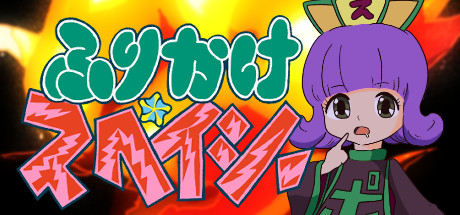
Cute character designs: The round and cute character designs are widely admired, contributing to the game's visual appeal. Players find the characters endearing and well-designed.
Common complaints
Humor is niche and tiring: The meme-style and parody humor is constant and can be exhausting to follow, especially for those unfamiliar with the referenced eras or jokes. Some players find it forced and not integrated well, making the game less accessible.
Cultural references alienate players: The game relies heavily on Japanese and Showa-era references, which many players find too deep and hard to understand. Non-Japanese players feel excluded due to language and cultural barriers, and about 40% of references go over their heads.
Story lacks growth and resolution: The game fails to deliver character growth and does not resolve the mysteries of the world, leaving players unsatisfied. The story passes without leaving a memorable impression, and the world view remains confusing.
Tennis minigame is frustrating: The tennis mini-game in chapter 4 is widely criticized for being too difficult and aggravating due to poor AI behavior. Players find it the worst part of the game, causing visible annoyance.
Abrupt and rushed ending: The ending comes too quickly and feels abrupt, with no preparation, leaving players wanting more. Later chapters are short and padded, and the story pacing is messy with no clear main axis.
Gameplay and performance
Visual novel with comedy: The game is consistently described as a visual novel featuring comedic and absurd plotlines, with an episodic structure and text-driven progression. Players find it humorous and entertaining, with a focus on dialogue and story rather than complex gameplay.
Includes multiple minigames: The game features various minigames such as fortune-telling, idiom chains, tennis, ping-pong, and rock-paper-scissors. These minigames add variety and interactive elements beyond the core visual novel experience.
In-game dictionary feature: A dictionary system explains highlighted words in dialogue, including memes and terminology, with over 700 entries. This aids comprehension and enriches the player's understanding of the game's references.
Choices lack story impact: Although the game offers choices, they do not affect the story branching, making the narrative linear. This may disappoint players expecting branching paths, but it keeps the plot focused.
Retro PC-98 visual style: The screen layout and visuals are reminiscent of the PC-98 era, giving a nostalgic retro aesthetic. This stylistic choice appeals to fans of classic Japanese computing.
Recommendations
Absurd Pop Team Epic humor: Multiple reviewers recommend the game to fans of Pop Team Epic, Hellshake Yano, and similar Japanese meme humor. This style of absurdist parody is the core appeal mentioned most frequently.
Chaotic black humor appeal: The game is recommended for players who enjoy chaotic, absurd, and dark humor, with some noting its extreme craziness. This aligns with the game's overarching comedic tone.
Buy if interested: Several reviewers simply advise buying the game if the store page or trailer appeals to you, suggesting that the game matches its promotional material. This is a straightforward recommendation for interested players.
Niche target audience: Many reviewers emphasize that the game is not for everyone, recommending it only to those who understand what they are getting into. This niche appeal is a recurring theme across feedback.
Best with friends: Playing with friends or in multiplayer is strongly recommended, with one suggesting it as a co-op experience and another recommending it while drinking. This social aspect enhances the game's humor.
Buying context
Community fair range: $5.00 - $8.00.
Game completion: 4.0h.
Story completion: 4.0h.
This game offers immediate fun for players who enjoy weird, unconventional titles, but it is highly polarizing and can be terrible for others who do not get hooked.
Player profiles
Nostalgic Meme Enthusiast: Reads attentively to catch every reference, appreciates randomness and borderline jokes. Motivation: Enjoying dense, chaotic references and absurd humor from Showa and internet culture. Stance: buy.
Hesitant Appreciator: Plays through but feels conflicted, likely finishes the game but holds back on recommendation. Motivation: Appreciating the unique humor and atmosphere while being aware of its niche appeal. Stance: no buy.
Short Novel Explorer: Plays through in one or two sittings, focused on the narrative and novelty. Motivation: Seeking a short, novel, and memorable experience that stands out. Stance: buy.
Extra review signals
External guides: All user feedback is positive regarding the game's built-in encyclopedia, which effectively addresses potential 'Wiki Tax' by providing explanations in-game. No complaints about external data dependency were found.
Other review notes
Extensive parody references: The game is filled with many parody references ranging from Showa era to early Heisei, including public figures, TV shows, and works like JOJO and 1984. Some references may be unrecognizable to younger or overseas players, but the game still succeeds.
Literary and media comparisons: Players compare the game's style and humor to various works, including Pop Team Epic, Bobobo-bo Bo-bobo, Mother, Saiki Kusuo, and Sailor Moon. These comparisons highlight its chaotic, gag-driven, and metafictional nature, though some find it more abstract.
Short yet dense gameplay: The game is relatively short, with playtimes reported from 3 to 8 hours depending on reading speed and completion. Despite the short length, it is densely packed with content, including jokes and references.
Neo-Showa setting and themes: The game is set in a 'Neo-Showa' era, which is a distinct fictional era blending Showa to early Heisei subculture themes. It explores themes of aimless wandering, kindness, crime, and distorted love, with a retro visual novel style.
High-quality Chinese localization: The game offers official Chinese localization, including simplified Chinese, and the translation quality is praised. This support for Chinese language makes the game more accessible to Chinese-speaking players.