- Excellent graphics and visuals
- Fun and enjoyable gameplay
- Unified grid system praised
- Unfinished Early Access product
- Numerous bugs and instability
- Missing features from predecessor
Emotions
Archetypes
Hardware
What players like:
Common complaints:
Gameplay feedback:
Performance notes:
Recommendations:
Other player notes:
Similar games
Blend with other games





Review evidence
Why players say this
Review evidence
Why players say this
Steam review verdict
Great graphics and fun gameplay with a praised unified grid are undermined by an unfinished Early Access build, frequent bugs and instability, and missing features from its predecessor.
What players like
Excellent graphics and visuals: Reviewers frequently praise the game's graphics, calling them beautiful, magnificent, and a masterpiece. Visual fidelity is a recurring highlight.
Fun and enjoyable gameplay: Many players find the game great, fun, and playable overall, with smooth performance and satisfying core mechanics.
Unified grid system praised: The unified grid is called fantastic and game-changing, allowing large and small blocks to connect seamlessly without merge blocks.
High potential despite alpha state: The game is seen as having huge potential and a strong foundation, with players expecting it to become great as development continues.
Graphics superior to first game: Multiple reviews explicitly compare the visuals to Space Engineers 1 and note a huge jump in graphical quality and lighting.
Common complaints
Unfinished Early Access Product: Reviewers widely describe the game as raw, incomplete, and far from a finished product, often citing its Early Access status. Many feel it should not have been released in this state.
Numerous Bugs and Instability: Players encounter a large number of bugs, including persistent old issues and new ones, making the game feel buggy and unstable. Many describe it as riddled with bugs.
Missing Features from Predecessor: The game lacks many features, blocks, and mechanics that were present in Space Engineers 1, such as rotors, automation, and varied content. Reviewers feel it is far behind its predecessor.
Poor Performance and Optimization: Performance is frequently criticized, with high resource usage and low frame rates even on lower settings. Optimization is seen as needing significant improvement.
Frequent Crashes and Freezes: Constant crashes to desktop and hard freezes requiring PC resets are reported, sometimes occurring within minutes of gameplay. This severely impacts playability.
Gameplay and performance
Survival mode with missions: Survival gameplay includes missions, story content, resource gathering, base building, and progression. Mission unlocks and new player missions are part of this mode.
Unified grid building system: Feedback repeatedly highlights a unified grid system that replaces separate small and large grids. This is a core building feature enabling combined block sizes and ship construction.
Block-based building and terraforming: The game features block-building with various sizes, snapping, blueprint menus, and physics-based construction. Players can terraform and build their own world in a sandbox style.
Ship and vehicle construction: Players build and fly ships, rovers, hoverbikes, and spacecraft using grid-based systems and blueprints. Ship building often starts from scratch to reach orbit.
Mission and contract systems: The game includes missions, contracts with bounties, and colonization mechanics. Missions vary and can be accepted or abandoned, with completion validation.
Performance varies widely: Reports range from stable high FPS on strong hardware to low FPS or playability only on minimum settings. Performance quality is highly inconsistent across systems and settings.
Frequent crashes to desktop: Players repeatedly report constant crashes to desktop and unexpected exits, including after updates and during new game or save loading. Crashes occur in many contexts and remain unresolved.
Optimization still needs work: Many reviews state optimization is poor or needs improvement, with some noting it is improving but still insufficient. Both vague and specific complaints point to ongoing performance problems.
Smooth performance on many rigs: Numerous players report smooth performance on NVIDIA GPUs and even low-end systems, with no noticeable stuttering. This contrasts with crash and optimization complaints.
AMD crashes and unplayability: Multiple clusters report consistent crashes, launch failures, and general unplayability specifically on AMD GPU and CPU hardware. This appears to be a major hardware-specific blocker.
Recommendations
Wait for full release: Many reviewers advise waiting until the game is more complete or fully released before buying. They feel it is not ready yet and recommend holding off to avoid disappointment.
Not recommended in current state: A significant number of reviewers explicitly do not recommend buying or playing the game in its current early access state. They cite unplayability and suggest waiting for improvements.
Worth buying and recommending: Many reviewers highly recommend the game and consider it worth the purchase. They express strong positive sentiment and encourage others to buy it.
Play Space Engineers 1 instead: Several reviewers recommend playing the original Space Engineers instead, especially for new players or those seeking a finished experience. They suggest SE1 is more complete and better for learning the basics.
Recommended for SE1 fans: Players who enjoyed the first Space Engineers are particularly likely to appreciate this game. Reviewers recommend it especially for veterans of the series.
Buying context
Community fair range: $20.00 - $30.00.
Story completion: 7.5h.
Session length: 3.5h.
The game’s fun is chiefly gated by onboarding: many players need the systems to click after a steep learning curve, and some never get there or wait for multiplayer. A minority report immediate sandbox or creative enjoyment, so the overall profile is conditional rather than a fixed wait.
Friction: Unclear or overwhelming tutorial that explains too little; Steep learning curve requiring outside research; Performance and stability problems; Repetitive early campaign fetch quests and minor tasks; Missing multiplayer; Clunky build menu and UI.
Unlock drivers: Systems starting to click after the learning curve; Improved tutorial that expands guidance; Accessible lego-like modules and kits for casual players; Multiplayer release.
Player profiles
Creative Sandbox Builder: Spends long sessions constructing and refining large, detailed ships and bases in sandbox mode. Motivation: Designing and optimizing detailed ships and stations in a creative engineering sandbox. Stance: buy.
Early-Access Co-Development Supporter: Checks in on updates, tolerates alpha bugs, and follows development progress closely. Motivation: Supporting the developer and watching the alpha improve over time. Stance: buy.
Multiplayer/Co-op Social Player: Plays co-op/PvP servers and tests large bases and complex ships with friends. Motivation: Sharing building, PvP, and large-scale testing with friends in multiplayer. Stance: no buy.
Platform notes
Across the six largest cohorts, the game is often playable on capable systems but is repeatedly held back by stuttering, crashes, and optimization issues. Most cohorts show mixed results, with the Windows 8-11GB VRAM / 16-31GB RAM group leaning clearly negative.
Windows 12-15GB VRAM / 16-31GB RAM: mixed. Many users report smooth 90 FPS at high settings, but others cite stuttering, FSR artifacting, and launch crashes on AMD hardware.
Windows <8GB VRAM / 16-31GB RAM: mixed. Several users get playable frame rates after lowering settings, while others report severe stutters, crash loops, low FPS, and heavy CPU/GPU load.
Windows 8-11GB VRAM / 16-31GB RAM: negative. Performance complaints dominate, with frequent crashes, heavy lag, poor optimization, and low or inconsistent frame rates even on reduced settings.
Steam Deck: The Steam Deck and Linux feedback shows severe compatibility friction. Multiple users report DirectX 12/vkd3d-proton shader compilation failures that make the game unplayable after world load, Steam Deck crashes when entering planets, and absent native controller support. Some users can run the game after selecting specific Proton builds or adding launch commands, but the experience is not out-of-box and remains unstable for many handheld users.
Linux and Proton: Linux and Proton compatibility for Space Engineers 2 is mixed and unstable. Some users run the game successfully, including reports of smooth performance on CachyOS and other distributions, often with Proton GE/Experimental or a PROTON_HIDE_NVIDIA_GPU launch option. However, many Linux-specific reports describe hard blockers: vkd3d-proton shader compilation failures that make worlds unplayable, launch crashes, desktop freezes, and regressions after updates. The lack of native Vulkan/Linux support and dismissed Linux bug reports add further friction. Because some Linux users clearly reach gameplay while others cannot, the game is best classified as barely playable rather than completely broken.
Extra review signals
Monetization: The reviews confirm that Space Engineers 2 has paid DLC during early access, including skin/cosmetic DLC and complaints about day-one DLC, plus concern that functional blocks could be paywalled. However, the evidence does not establish real-money gacha, loot boxes, pay-to-win stats, currency obfuscation, or a current functional-block paywall. Many negative comments refer to Space Engineers 1's ongoing DLC or base-price value, which are outside the direct MTX assessment. The confirmed pattern fits a standard cosmetic DLC model rather than casino-style or power-selling monetization.
External guides: The primary Wiki Tax issue is instructional data dependency: users must consult external documentation, wikis, forums, or QA sources to understand stats and mechanics such as thrust, power, altitude, grid, and PCU. There is no clear evidence of Tier 1 farming/drop-rate dependency or Tier 2 inventory/crafting valuation dependency. Crashes and UI complaints appear as secondary issues, but the strict priority scan lands on Tier 3.
Other review notes
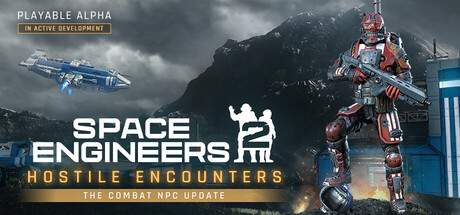
Game remains in alpha: Many reviewers note that the game is still in an alpha or early access state, with incomplete features and ongoing development. Some mention it has been in alpha for an extended period and is not yet at a beta stage.
Improvement over predecessor: Reviewers consistently compare the game favorably to Space Engineers 1, describing it as a substantial upgrade with major improvements in many areas. Even in its early state, it is seen as a step up from the original.
Direct sequel to Space Engineers: The game is widely recognized as the sequel to Space Engineers 1, with reviewers noting similarities and calling it a successor. Some see it as a play test for experienced players of the first game.
Mixed or unfavorable comparison to SE1: Some reviewers find the game lacking compared to the first title, citing missing quality-of-life features and a rougher experience. Others note it is not yet at the same quality as the original.
Favorable comparison to SE1 in specific areas: Reviewers compare the game favorably to Space Engineers 1 in terms of ship controls, building and physics behavior, visuals, performance, and progression. Some aspects are seen as better, though not all.