- Buggy and janky gameplay
- Unique and compelling experience
- Clunky frustrating user interface
- No tutorial or explanation
- Active developer commitment
- Creative ship customization
Emotions
Archetypes
Hardware
What players like:
Common complaints:
Gameplay feedback:
Performance notes:
Recommendations:
Other player notes:
Similar games
Blend with other games







Review evidence
Why players say this
Review evidence
Why players say this
Steam review verdict
A unique experience with creative ship customization, but suffers from buggy janky gameplay, a clunky UI, and no tutorial, though active developers are committed to improving it.
What players like
Unique and compelling experience: Players repeatedly describe the game as unique, original, and refreshing compared to mainstream titles. It offers a distinct feeling and memorable, engaging experience.
Enjoyable and good gameplay: Multiple reviews state the gameplay is enjoyable, wonderful, and feels great, with the game overall being good. This positive gameplay experience is a common theme.
Game shows great potential: Many reviews note the game has incredible potential, with a good game inside and many possibilities. This suggests promise for future development and depth.
Interesting and good ideas: The game's concept is praised as interesting, fun, and awesome, with phenomenal ideas. Players find the core idea cool and engaging.
Amazing and worthwhile game: Reviews call the game an absolute gem, brilliant, fantastic, and worth the price. The overall quality and fun factor are highly valued.
Common complaints
Game is buggy and janky: Many reviews mention numerous bugs, glitches, and performance issues, making the game feel unpolished and unstable. The frequency of these problems suggests they are a major point of frustration for players.
UI is clunky and frustrating: Players consistently report that the UI is disorganized, tedious, and counter-intuitive, requiring excessive clicking and micromanagement. This widespread issue significantly hampers the overall gameplay experience.
No tutorial or explanation: The game provides little to no explanation on how to play, leaving players confused and without direction. This is especially problematic for a complex game and leads to initial frustration.
AI is poor and needs babysitting: Players report that both crew and NPC AI are unintelligent, require constant management, and can make simple tasks frustrating. This greatly impacts gameplay when relying on AI companions.
Lacks localization for key languages: A notable number of players point out the absence of Chinese, Russian, and Japanese localization, making the game difficult or painful to play for non-English speakers. This significantly limits accessibility.
Gameplay and performance
Ship customization and upgrading: Players can deeply customize, upgrade, and modify their ships, including salvaging parts to expand storage and improve capabilities. This appears to be a core gameplay loop.
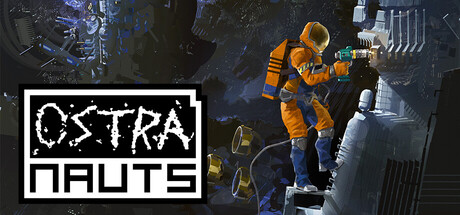
Space scavenging gameplay: Core gameplay involves piloting a ship to scavenge derelict spaceships, salvage parts, and sell them. It is described as a space scavenger simulator with gritty and grindy atmosphere.
Solar system exploration: The game features interplanetary travel with realistic space physics, allowing players to fly around the solar system. This provides an immersive and realistic space simulation experience.
NPC social interactions: The game includes NPCs with dialogue, quests, and social systems, including flirting, character pronouns, and friendship mechanics. There is also social combat mechanics and interactions requiring periodical engagement.
Survival and scavenging mechanics: The game has a scavenging and upgrading gameplay loop with survival elements, akin to Neo Scavenger. There are multiple playstyles including looting, scavenging, and pirating.
Performance issues and lag: Multiple players report frequent lag, stuttering, and performance drops, often caused by background processes or long play sessions. These issues are prevalent and affect gameplay significantly.
Crashes and instability: Many players experience crashes to desktop, frequent crashes, and game-breaking bugs, with some noting that crashes become more frequent over time. This leads to frustration and lost progress.
Performance during complex tasks: The game slows significantly when building, repairing, or assigning many tasks, especially in NPC-heavy environments or with large ships. This includes severe frame drops with just 20 floor tiles or when issuing hundreds of tasks.
Memory leak issues: Memory leaks are a common complaint, causing slowdowns and the need for frequent restarts. Players note high RAM usage (over 9-12 GB) and recommend more memory for stability.
Optimization improvements needed: Many players express that the game is unoptimized, with massive optimization issues and poor performance even with beefy setups, urging developers to focus on optimization.
Recommendations
Not recommended in current state: Several reviewers state the game is not recommended due to its current janky state and niche appeal. The game is described as only for a hyperniche audience, with some advising against purchase at this time.
Game is worth buying: Reviewers find the game worth the money and time, with some expressing no regret spending money on it. The game is praised as absolutely worth buying and well worth the price.
Niche audience only: The game is clearly designed for a specific type of person and is not for the masses. It appeals to a niche audience and is not for everyone, with some calling it a love-it-or-hate-it experience.
Highly recommended by some: A portion of reviewers highly recommend the game, with one calling it 'HIGHLY recommended'. The game is generally recommended, though this is less common than mixed or conditional recommendations.
Great for simulation fans: The game is recommended for players who enjoy gritty, deep simulations. It suits those who like systems-driven games with deep and original mechanics.
Buying context
Community fair range: $15.00 - $25.00.
Ostranauts requires overcoming a steep learning curve and early frustrations, after which the salvaging loop and atmosphere become highly rewarding.
Friction: steep learning curve; unclear or incomplete tutorial; tedious early salvaging loop; confusing controls (docking, navigation); lack of clear direction after tutorial; buggy and unresponsive systems.
Unlock drivers: mastering game mechanics through repetition; learning from failures and restarts; gradually building knowledge of systems; progressing through early game hurdles; achieving first successful salvage and ship upgrades.
Player profiles
Hardcore Simulation Enthusiast: Deliberate, risk-aware, and methodical; enjoys mastering complex interlocking systems and overcoming a steep learning curve for deep reward. Motivation: To experience deeply simulated, hard sci-fi systems with emergent consequences and high-risk high-reward gameplay. Stance: buy.
Patient Skeptic / Cautious Future-Buyer: Tends to persevere but is easily frustrated by bugs, poor UI, and lack of polish; may play in bursts or wait for updates. Motivation: To eventually enjoy the game's potential once it matures, but currently disappointed by the unfinished state and rough edges. Stance: no buy.
Immersive Narrative Roleplayer: Slow-paced, character-driven, and story-focused; enjoys emergent narratives, roleplaying choices, and atmospheric world-building over optimized efficiency. Motivation: To live out a personal sci-fi story reminiscent of The Expanse or Firefly, with a focus on character progression and ship customization. Stance: buy.
Platform notes
Performance varies significantly by VRAM tier: low-VRAM systems struggle with stuttering and AI bugs, mid-range offers playable experience, and high-end still faces major performance issues despite being recommended.
Windows <8GB VRAM: negative. Performance is poor, with frequent stuttering, lag, AI issues, and save problems, making the game difficult to enjoy.
Windows 8-11GB VRAM: positive. Most users report playable performance with only minor bugs and occasional lag, though some AI pathfinding issues exist.
Windows 12-15GB VRAM: positive. Performance is generally acceptable on this hardware, with few complaints and a positive experience overall.
Steam Deck: Ostranauts is playable on Steam Deck but requires significant customization: users must adopt a community control scheme, manually remap keys, and may experience UI scaling issues. Performance is generally good after minor tweaks like using Proton Experimental. The game is not broken, but out-of-the-box readiness is low.
Linux and Proton: The game requires specific launch options (DRI_PRIME, CPU topology) to achieve smooth performance on Linux, and a minor Linux-specific bug appears during initial setup. After applying these tweaks, the game runs nicely without further issues. The use of Proton Experimental helps smooth out cross-platform performance hiccups.
Extra review signals
External guides: The primary feedback points to a strong dependency on the wiki and external guides for understanding complex mechanics, builds, and quest progression, a problem partially mitigated by updates. Persistent bugs also contribute to the need for external research. The overall external data dependency is moderate, driven by insufficient in-game instruction.
Other review notes
1.0 release feels premature: Multiple reviews state the game has reached 1.0 but is not ready for full release, with many describing it as still feeling like early access. This suggests the 1.0 version has significant unpolished aspects.
Confusing release status messaging: There is contradictory feedback about whether the game is in early access or fully released, with some saying it is leaving soon and others already treating it as 1.0. This confusion may affect player expectations and reviews.
Comparisons to other survival games: Reviews compare the game to Project Zomboid, Rimworld, Dwarf Fortress, and The Sims, indicating its genre and features are reminiscent of these titles. This helps potential players understand the gameplay style.
Comparison to NEO Scavenger: Many reviews mention the game is by the developer of NEO Scavenger and draw direct comparisons, noting similarities in style and mechanics. This is a key reference point for players familiar with the previous title.
Lack of language support: Reviews point out missing Chinese and Russian language support, which limits accessibility for non-English speakers. This is a notable issue for broader market reach.