- Fun, innovative weapon-based combat and movement mechanics praised.
- Multiplayer and co-op modes highly engaging with friends.
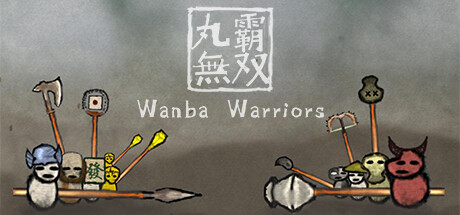
- Unique absurd humor and art style stand out.
- Poorly optimized keyboard controls frustrate players significantly.
- Base game criticized for limited playable characters.
- Online multiplayer suffers from instability and crashes.
Emotions
Archetypes
What players like:
Common complaints:
Gameplay feedback:
Performance notes:
Recommendations:
Other player notes:
Similar games
Blend with other games




Review evidence
Why players say this
Review evidence
Why players say this
What players like
Core gameplay praised as fun: Players consistently describe the game as inherently enjoyable, with terms like 'fun,' 'engaging,' and 'good' appearing frequently. The base gameplay loop resonates across reviews, even among those who acknowledge its simplicity.
Multiplayer and co-op highly enjoyed: The game’s multiplayer modes—including local co-op, online P2P, and arcade—are frequently highlighted as standout features. Players emphasize that the experience is significantly more enjoyable with friends, calling it 'fun,' 'engageable,' and a key reason to replay.
Deep combat with high skill ceiling: The combat system is praised for its depth, blending simple controls with complex mechanics like weapon rotation, stamina management, and character-specific abilities (e.g., Huang Laobing’s hybrid attacks). Mastery is described as rewarding, with a steep learning curve that appeals to skill-focused players.
Absurd humor and unique art style: The game’s comedic tone, quirky characters, and distinctive art style (e.g., '灵魂质感的画风') are frequently cited as charms that enhance the experience. Players appreciate the developer’s personality shining through the absurd, lighthearted design.
Simple controls mask strategic depth: While controls are described as easy to learn ('简单无脑') or intuitive, they underpin a deeper layer of strategy (e.g., stick rotation + button combos). Players note that the game’s accessibility lowers the skill floor while retaining a high ceiling for mastery.
Common complaints
Keyboard controls poorly optimized: Keyboard/mouse controls are widely described as clunky, unintuitive, and disadvantageous, with complaints about 8-directional movement limitations, 'disgusting keybinds,' and lack of directional input support. Many players strongly discourage keyboard use, citing frustration and unplayability.
Base game lacks playable characters: The base game includes only 5–6 characters, with 26 additional characters locked behind paid DLC. Players criticize the limited roster as restrictive and the DLC pricing (avg. 2.5–7.5 currency units per character) as exploitative, especially compared to the base game’s cost (e.g., £10.85 for DLC vs. £4.29 for the game itself).
Perceived as a rushed cash grab: The heavy reliance on DLC (locking 26+ characters) and disproportionate pricing (e.g., DLC costing more than the base game) lead to accusations of exploitative monetization. Players feel the game prioritizes profit over completeness, with some calling it a 'cash grab.'
Lack of core game modes: Players highlight the absence of a campaign mode, progression system, unlockables, and meaningful single-player content. The game is criticized for feeling shallow, with limited modes (e.g., poor multiplayer) and no story ('故事?什么故事?').
Online multiplayer issues: Online play suffers from a declining player base, long matchmaking times, high latency/ping, and unbalanced matches (e.g., DLC characters dominating). Players also criticize the mode as poorly implemented and in need of rework.
Gameplay and performance
Multiplayer-focused gameplay: The game emphasizes multiplayer modes, including team-based PvP, co-op multiplayer, and PvE against bots. It supports both local and online multiplayer, with a strong focus on social and cooperative play.
Innovative weapon-based movement and combat: The game features a unique combat system where weapons are used not only for attacks but also for movement, such as pole-vault-like jumps and directional swinging. This system includes a stamina mechanic that is expended mid-air and replenished upon landing, adding a layer of strategy to both combat and mobility.
Unique fighting game mechanics: The game introduces non-traditional fighting game mechanics, including physics-based combat with dismemberment and character-specific abilities. These mechanics provide a fresh and unique experience compared to traditional fighting games.
Character abilities and DLC model: Character abilities are divided into small skills based on cooldowns and large skills dependent on rage. The game also features a character-based DLC model, introducing new characters and mechanics through expansions.
Peer-to-peer multiplayer networking: The game utilizes peer-to-peer (P2P) connections for its multiplayer modes, which includes both local and online multiplayer support. This allows for a variety of multiplayer experiences without the need for dedicated servers.
P2P networking instability prevalent: Players report frequent P2P connection drops, high ping, and imbalance issues, severely impacting multiplayer gameplay. These problems are consistent across multiple reports, indicating a systemic networking flaw.
Server crashes disrupt gameplay: Frequent server crashes are mentioned, causing interruptions and frustration during online sessions. This suggests backend reliability issues needing urgent attention.
Steam Deck compatibility problems: Players encounter issues running the game on Steam Deck, though specifics (e.g., performance, controls) are unclear. This limits accessibility for handheld users.
Strong Linux performance reported: The game runs smoothly on Linux Mint 22.2, highlighting good optimization for Linux distributions. This is a positive outlier in cross-platform compatibility.
Low hardware requirements praised: Players note the game runs well even on very low-end hardware (e.g., machines capable of running Minesweeper). This broadens accessibility for budget systems.
Recommendations
Complete Edition offers best value: The Complete Edition (base game + all DLC) is frequently recommended for its full 24-character roster, especially during discounts. Players warn against piecemeal DLC purchases due to cost inefficiency.
Multiplayer thrives with friends: Players consistently highlight the game as best enjoyed in co-op or versus modes with friends, both offline and online. Solo play is often discouraged due to reduced engagement or missing features.
Arcade mode needs difficulty options: Criticism targets the lack of adjustable difficulty in arcade mode, which limits accessibility for casual or less skilled players. Suggestions include scalable AI or customizable handicaps.
Demo/trial needed for informed purchases: Players repeatedly urge others to try the game via free weekends, demos, or trials before buying, citing mixed experiences with gameplay feel or content depth.
Budget-friendly during sales/droughts: Highlighted as a cost-effective option during gaming droughts or sales, particularly for players with low-end PCs or those seeking accessible fighters.
Buying context
Community fair range: $3.00 - $8.00.
Game completion: 5.0h.
Story completion: 5.0h.
Session length: 4.0h.
The game clicks immediately in co-op due to its chaotic, humorous combat, but fun drops within ~2 hours unless played with friends; solo play is widely panned as boring or shallow.
Reported time to anchor: 30m.
Friction: No meaningful solo content or progression systems (no campaign/unlocks/achievements); Controls require time to learn ('not intuitive'); Majority of characters locked behind paid DLC; Multiplayer relies on having friends/active player base (often lacking).
Player profiles
Social Party Brawler: Casual, cooperative or free-for-all brawls with emphasis on absurd physics and combo antics. Avoids ranked or online matchmaking due to population issues. Motivation: Shared laughter and chaotic fun with friends in local/private multiplayer. Stance: sale.
Input Struggler: Adaptive but hindered—may avoid complex moves (e.g., weapon-jumping) due to control clumsiness. Prefers single-player or AI matches to avoid embarrassing themselves in PvP. Motivation: Seeking a fair or comfortable way to play, often willing to troubleshoot hardware/software to enjoy the game. Stance: deep sale.
Solo Speedster: Optimized, solo-focused runs (e.g., arcade mode). May experiment with characters once but rarely revisits. Ignores multiplayer due to logistical barriers. Motivation: Clearing content efficiently for achievement or curiosity, with no interest in grinding or social play. Stance: deep sale.
Platform notes
Steam Deck: The analysis of user feedback for the Steam Deck reveals significant issues with controller support and multiplayer controller compatibility. These issues range from difficulties with button mapping and menu navigation to problems with specific controller models in multiplayer modes. While some users have had positive experiences, the recurring themes of controller-related problems indicate areas that need improvement.
Extra review signals
Monetization: The game exhibits **strong indicators of predatory monetization**, primarily through **Day-1 DLC practices** where core content (characters) is locked behind multiple paid DLCs costing more than the base game. Users repeatedly describe the game as a 'cash grab,' citing the lack of progression systems and the fragmented nature of the content. While no confirmed pay-to-win mechanics were found, the aggressive DLC model—combined with the perception of low effort—suggests a design prioritizing monetization over player value. The absence of microtransactions or gacha mechanics keeps the score below the highest tier, but the DLC strategy alone qualifies as **highly aggressive**.
Other review notes
DLC unlock tools mentioned: Players reference using external 'tools' to access DLC characters, implying potential piracy concerns or frustration with DLC accessibility. No explicit protest is stated, but the tone suggests dissatisfaction.
Demand for new DLC: Players explicitly request additional downloadable content, indicating interest in expanded gameplay or characters. This reflects a desire for ongoing support from developers.
Curator group reference unclear: A cluster mentions a 'curator group' without context, making its relevance to gameplay or player experience ambiguous. Lacks detail for actionable insight.