- Solid tower defense core gameplay
- Massive tower combination variety
- Excellent multiplayer and co-op support
- Frequent multiplayer desync problems reported
- Small and inactive player base
- Late-game difficulty feels artificial
Emotions
Archetypes
What players like:
Common complaints:
Gameplay feedback:
Performance notes:
Recommendations:
Other player notes:
Similar games
Blend with other games


Review evidence
Why players say this
Review evidence
Why players say this
Steam review verdict
Solid tower defense with huge tower variety and great co-op, but frequent desyncs, a tiny inactive player base, and artificial late-game difficulty hold it back.
What players like
Solid tower defense core: Reviewers consistently describe the game as a well-made, fun, and classic tower defense experience with straightforward, addictive gameplay. It is frequently called one of the best tower defense titles available.
Massive tower combinations: The game offers a huge variety of towers and elemental combinations that unlock unique variations and effects. Players highlight the endless experimentation and constant new tower compositions.
Excellent multiplayer and co-op: The game supports both single-player and multiplayer co-op, with online co-op described as top-notch. Playing with friends is repeatedly highlighted as especially fun.
High strategic depth and replayability: Many options for tactics and strategy development, combined with numerous game modes and modifiers, give the game high replayability. Reviewers note it offers plenty of depth for both casual and hardcore players.
Generally well-received game: Overall, reviewers describe the game as excellent, very good, beautiful, and engaging. It is undeniably considered a good game by the community.
Common complaints
Frequent multiplayer desync issues: Multiple reports describe persistent desynchronization in co-op and multiplayer, causing players to see different health, builds, and wave progress. These bugs have existed for years and make multiplayer almost unplayable.
Unfavorable comparison to Warcraft 3: Players consistently feel the game is inferior to Warcraft 3 tower defense custom maps in visuals, familiarity, and content. It is often described as a bad clone lacking the depth of the original.
Small and inactive player base: The multiplayer population is very small, making it hard to find matches and rendering the game mostly enjoyable only with friends. Single-player is not recommended due to the lack of players.
Artificial late-game difficulty: Later maps become difficult purely for the sake of difficulty, with careless calibration of challenges and settings. Difficulty feels unreasonable even on Normal.
Limited tower variety and balance: Tower variety is lacking compared to Warcraft 3 maps, and many towers feel useless or uninteresting. Balance is perceived as off, with inconsistent performance across towers.
Gameplay and performance
Core tower defense gameplay: The game is consistently described as a tower defense game with classic mechanics, including tower placement, mazing support, multiple maps, and game modes. Players highlight the strategic depth and variety of build options.
Co-op multiplayer support: Many reviews mention the availability of online co-op, supporting 2-8 players with multiple maps in the base game. Co-op can be played with friends worldwide, and the game includes both cooperative and competitive modes.
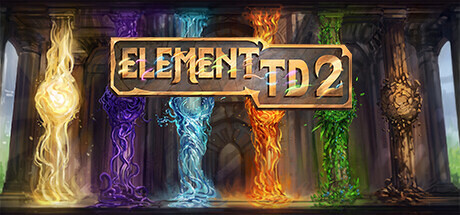
Elemental combination system: A central feature is the elemental system where players combine base elements (fire, water, wind, earth, light, dark) to create hybrid towers with different effects. The system drives tower variety and strategic depth.
Playable solo or with friends: The game supports both solo and multiplayer play, allowing players to enjoy it alone or with friends. It can be played with others in co-op or competitive settings.
Single-player campaign mode: The game offers a single-player mode with a campaign that is described as long and challenging, including scenarios and missions. It serves as a way to learn the game and provides solo challenges.
Frequent crashes reported: Players experience crashes at various points, including at level 28, during loading, finishing a match, and randomly. Some note that crash issues existed previously.
High CPU usage and heat: The game is heavily CPU bound and causes high CPU usage, loud fans, and even overheating that shuts down the computer. It makes the machine work harder than Elden Ring.
Runs well on some systems: Despite widespread issues, some players report smooth performance on mid-range gaming laptops and their PCs, with no lag.
Poor late-game performance: Performance drops significantly in later stages, with frame rates as low as 10-15fps on high-end hardware like a 3800X and 3080 Ti. Large maps and many units cause severe lag even on low settings.
Designed for low-end hardware: The game is designed to run on low-end hardware, and graphics are good without destroying the graphics card. It runs smoother with many towers and creeps.
Recommendations
Strongly appeals to tower defense fans: The overwhelming majority of recommendations target players who already enjoy the tower defense genre. Many reviewers describe it as a must-play or highly recommended for tower defense enthusiasts.
Worth the price: Many reviewers explicitly state the game is worth the money, even at full price. Some mention that the single-player content alone justifies the cost.
Best enjoyed with friends: Numerous recommendations highlight multiplayer and co-op as the ideal way to play. Playing with friends or at a LAN party is frequently suggested for maximum fun.
General positive recommendation: A cluster of reviews simply recommends the game without specific caveats. These are straightforward endorsements from satisfied players.
Better on sale: Several reviewers suggest the game is a better value when purchased at a discount. They recommend waiting for a sale if you are on the fence.
Buying context
Community fair range: $10.00 - $15.00.
Story completion: 6.0h.
Session length: 1.0h.
Element TD 2 often has a tutorial-light, steep start that can feel boring or confusing until players learn the systems and start experimenting with tower builds; some experienced tower-defense players may find it fun immediately.
Friction: No tutorial or guidance for new players; Assumes prior experience with the Warcraft/Starcraft Element TD mods; Steep learning curve for newcomers; Crowded interface and small text; Early play can feel boring before the systems are understood; Multiplayer lag, desyncs, and low population can delay multiplayer fun.
Unlock drivers: Campaign missions teach tower weaknesses and strengths; Experimenting with different tower and element builds yields fun; Campaign skill trees and level progression provide advancement.
Player profiles
WC3 Nostalgia Veteran: Plays classic tower-defense runs, often solo or in nostalgic multiplayer sessions, valuing faithful mechanics and no-grind progression. Motivation: To relive the classic Warcraft 3 tower-defense experience with modern polish and more content. Stance: buy.
Competitive Ranked PvP Grinder: Plays ranked PvP and team modes, heavily optimizing economy and tower placement, including selling and rebuilding towers to gain interest. Motivation: To climb ranked ladders, prove mastery, and exploit the PvP meta. Stance: sale.
Co-op Social Player: Plays co-op and team multiplayer modes with friends, treating the game as a social activity rather than a solo grind. Motivation: To have fun playing tower defense with friends in shared co-op sessions. Stance: sale.
Platform notes
Steam Deck: Most reviews praise Linux/Proton and Steam Deck compatibility, with smooth controls and no audio or mouse issues. However, translated Chinese feedback reports repeated crashes at level 28 and prior instability, and one reviewer says the game does not run well under Proton. Under the rubric, repeatable crashes place the experience in the Broken tier despite otherwise strong compatibility. No external-launcher or small-text complaints appear in the dataset.
Linux and Proton: Linux and Proton feedback is predominantly positive: several users say the game launches and runs without issues, with one reporting smooth performance and working audio/input under SteamPlay Proton. There is one isolated report of weak Proton performance and a mention of an easy DXVK rendering workaround, but no consensus of launch failures, anti-cheat blockers, or severe instability.
Extra review signals
Monetization: The reviews do not provide direct evidence of a real-money in-game shop, paid gacha, loot boxes, paid power, currency obfuscation, or aggressive FOMO monetization. The recurring concern is paid DLC and expansion content, including one allegation that campaign features are paywalled. Several reviews explicitly state that the game is not pay-to-win and has no microtransactions. Under the scoring rules, paid DLC and expansion content alone cannot push the score above 20.
Other review notes
Faithful Warcraft 3 nostalgia: Many reviewers describe the game as building directly on classic Warcraft 3 custom map roots, evoking strong nostalgia for that era. The game is widely seen as a faithful continuation of the original mod while adding modern polish.
Improved over original versions: Comparisons to the Warcraft 3 and StarCraft 2 versions often highlight better graphics, controls, and expanded content. Reviewers feel the standalone release improves on the classic mod experience.
Standalone Element TD successor: Reviewers frequently identify the game as a standalone version of the Element TD custom map from Warcraft 3 and StarCraft 2. It is described as a modernized sequel that preserves the original design.
Standalone from classic mod: The game originated as a Warcraft 3 custom map and later became a standalone release, with a definitive edition by a separate studio. This origin is frequently noted.
Active developer support: The developers are praised for frequent updates, balancing patches, and new content such as maps and tower types. This ongoing support is seen as a major positive.